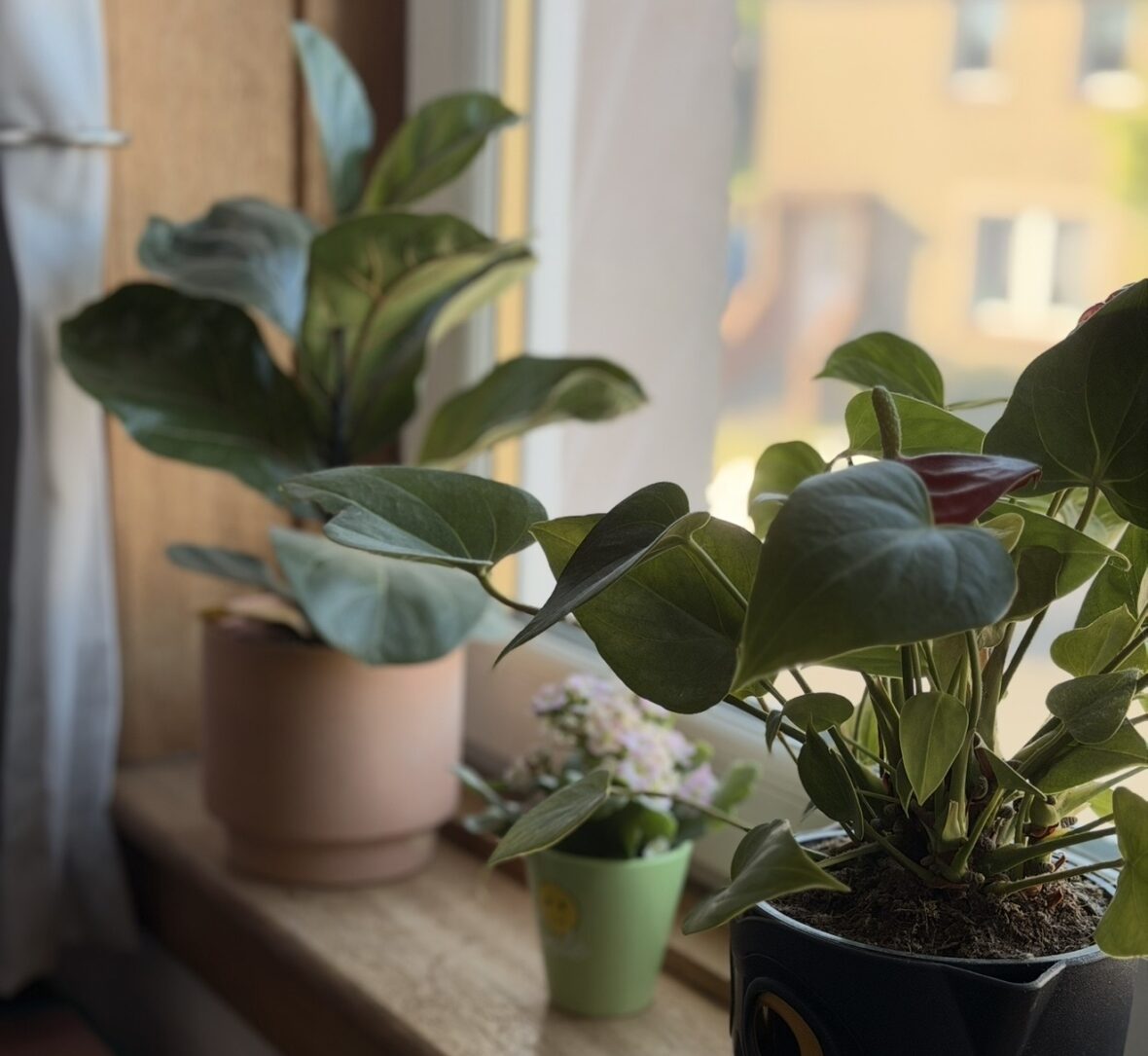
Chronic illness has a way of redrawing your own geography. Distances that once seemed insignificant expand. A walk to the corner shop can become an expedition; a journey across a room can require an absurd amount of negotiation. Some mornings, I wake knowing that my world will be no larger than the dimensions of my bed. From my pillow, I look out through the window at the birds crossing the frame in brief flashes of movement, travelling routes I cannot see and cannot follow. They disappear beyond the rooftops and return again according to rhythms that belong to them alone. Seasons announce themselves this way: through the arrival of different birds, through changes in light, through leaves appearing and disappearing on the trees beyond the glass. On the windowsill sits an aloe vera plant I named ‘Vincent Van Grow’ — a joke that continues to amuse me far more than it should. Its thick green leaves lean toward the light and in the four years Vincent has been with me, he has asked very little: water occasionally, turn the pot every so often, say good morning upon opening the curtains and, in general, notice that he is alive.
When I am confined to bed, the plant becomes a small reminder of a world beyond the room. Not an escape from it exactly, but a thread connecting me to it — some days, I will admit, the thread seems more frayed than others. The birds continue their daily circuits and the aloe continues its slow, almost imperceptible growth. Outside, roots push deeper into soil, buds open, seeds disperse and leaves fall. Life proceeds according to cycles that do not pause simply because my own movement has asked for a hiatus. There is a peculiar quality to these days. They feel neither fully active nor fully restful, neither participation nor absence. Like many ways I experience life, they feel like another kind of in-between. Illness often places a person in a threshold space: present in the world and yet separated from many of its ordinary rhythms.
Perhaps that is why I find myself drawn to the language of plants. We speak of being rooted in a place; we can put down roots, we can become uprooted, we return to our roots. The metaphors are so familiar that they often pass our lips unnoticed. Yet lying in bed, watching birds move across the sky while Vincent Van Grow occupies his small patch of sunlight, I find myself wondering why plants have become one of our primary ways of understanding human life. Why roots? Why branches, blossoms, seeds, and fruit? Human beings are animals; we walk, migrate, travel, wander — but plants remain where they grow. Why, then, do we reach instinctively for them when speaking about belonging?
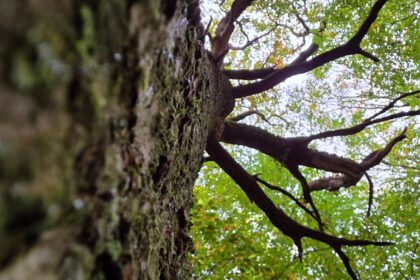
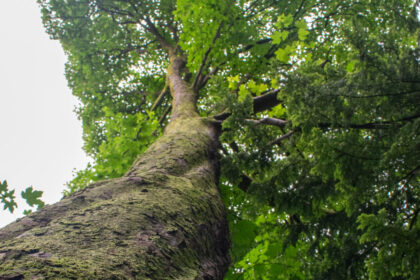
English is saturated with botanical metaphors. Families are organised into trees, ideas take seed, and opportunities blossom. The sheer abundance of these expressions suggests that plants do more than decorate our speech. They provide some of the deepest structures through which we understand human life. We do not merely compare ourselves to plants; we think through them. Consider ‘roots’. The cultural meaning appears straightforward: to be rooted is to know where you belong. Rootlessness carries negative associations — adrift, dislocation, or even uncertainty. Yet actual roots tell a more complicated story. They are not passive anchors; they are exploratory organs. They grow toward water, around obstacles, and through cracks in stone. Beneath the apparent stillness of a tree lies an ongoing process of movement and negotiation. Forest ecologists have shown that tree roots form partnerships with fungi, exchanging nutrients through underground networks. What appears above ground as an individual organism often survives through forms of cooperation hidden below the surface.
The popular image of rootedness emphasises permanence. The biological reality emphasises responsiveness. The difference matters because the metaphor shapes how we think about belonging itself — treating it as something fixed and singular, when human lives, like root systems, are rarely so tidy.
Perhaps the most consequential botanical metaphor of all is ‘growth’. Few words are used more positively in contemporary culture. Economies grow, companies pursue growth, individuals seek personal growth; the term often functions as a synonym for improvement itself. Yet plants grow within limits — their development depends upon sunlight, nutrients, water, climate, and countless ecological relationships. Growth alternates with dormancy. Expansion is balanced by constraint. Modern economic growth is frequently imagined differently: continuous, indefinite, and detached from ecological conditions. The same word shelters two competing visions of flourishing; one emerges from living systems, and the other often ignores them.
This may be the deepest lesson concealed within our botanical vocabulary. Plants entered language because they offered models for understanding existence itself — demonstrating that life is relational, seasonal, dependent, and adaptive. No organism flourishes alone. Yet many contemporary societies behave as though independence were the highest achievement and separation from nature an accomplished fact. We celebrate rootedness while uprooting ecosystems; we praise growth while destabilising the conditions that make growth possible. We speak constantly in the language of botany while paying remarkably little attention to plants themselves.
Still, the metaphors persist. I think again of the view from my bed. On difficult days, the world can seem divided by the windowpane, and yet the division is not as complete as it appears. Vincent turns toward the same light that reaches across my room, the birds and I inhabit the same seasons, even if we move through them differently. The trees outside my window shed their leaves whether I witness it or not, but over time I have come to know their rhythms almost as intimately as my own. A tree cannot leave the ground, yet it is never truly still; it responds continuously to light, weather, drought, abundance, damage, and time. Its life is shaped by what surrounds it.
Looking out of the window, I am less interested now in roots as symbols of permanence than as reminders of participation. Even from a bed, even on days when movement feels impossibly distant, I remain part of a living world unfolding beyond and around me. Long before ecology gave us a scientific language for interdependence, plants had already given us a metaphorical one. Our speech remains full of roots, branches, seeds, blossoms, and fruit because these forms help us recognise something fundamental about ourselves. The question is whether we can learn again from the living organisms whose language we have borrowed for so long.
In the wild and in-between,
Rochelle x